

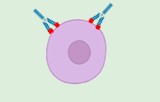
Flow cytometry isotype controls
Isotype controls are crucial in flow cytometry to ensure the accuracy and reliability of antibody-based assays. These controls consist of antibodies that match the isotype, subclass, and species of the primary antibodies used in an experiment, but lack specificity for the antigen being studied. By using isotype controls, researchers can assess the level of nonspecific binding or background fluorescence in flow cytometry experiments. This is especially important in complex multicolor flow cytometry, where multiple antibodies are used simultaneously to identify distinct cell populations or markers.
The isotype controls allow the:
- Validation of antibody binding specificity: Isotype controls help confirm the specificity of antibody binding in flow cytometry.
- Differentiation of specific and nonspecific signals: They assist in distinguishing between fluorescence signals due to the target antigen and nonspecific background signals.
- Improvement of data interpretation: By eliminating nonspecific signals, isotype controls enhance the overall quality and reliability of data analysis.
- Optimization of experimental conditions: They provide a benchmark for background fluorescence, allowing for adjustments in antibody concentrations, incubation times, and washing protocols.
- Minimization of errors: Isotype controls help reduce experimental errors by ensuring observed fluorescence truly reflects antigen expression levels.
- Accurate representation of antigen presence: They ensure that fluorescence data is a true reflection of the antigen's presence and expression on cells.
Isotype controls are vital in many research fields such as immunology, cancer research, and immunophenotyping. Their use contributes to more accurate conclusions and reproducible results in flow cytometry experiments.